Fellowship Program
The West Coast Ocean Alliance Fellowship Program is a full-time, one-year fellowship position designed to offer firsthand exposure to natural resource and ocean policy and science within the U.S. West Coast region.
2026 Fellows
-
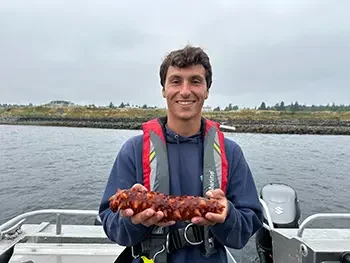
Taylor Bruntil
Assignment: Taylor will be serving as the Ocean Science Fellow with the Washington Department of Ecology. This fellowship will play a critical role in advancing Washington State’s effort to develop a Pacific Coast Science and Research Agenda framework.
Education: Taylor earned a bachelor’s degree from Western Washington University with an emphasis in ecology and evolution, and went on to receive a master’s degree from Cal Poly Humboldt, in marine ecology. Taylor’s graduate research assessed how biodiversity influences species establishment in marine invertebrate communities.
Professional & Research Interests: Taylor is pursuing a career conducting research in the coastal ecosystems of Washington state, specifically interested in marine invertebrates. If given the choice, Taylor’s dream is to study gelatinous zooplankton. Overall, the hope is to take part in research that deepens our understanding of marine communities and supports efforts to protect ecosystems along the Pacific coast.
-
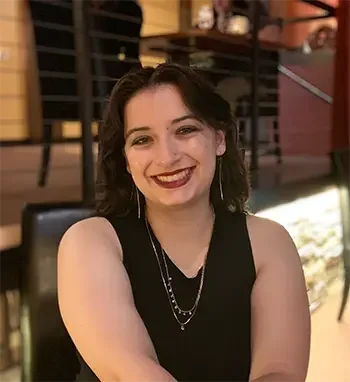
Maya Feezell
Assignment: Maya will be working with the Oregon Coastal Management Program to curate and maintain data via the West Coast Ocean Data Portal. Maya's work will focus on data transparency, outreach, and collaboration between multiple partner groups working in Oregon, California, and Washington.
Education: Maya recently completed a PhD at Oregon State University with Dr. Bruce Menge. Her thesis work focused on how climate change is affecting tide pool communities along the Oregon Coast. Before this, Maya received a B.S. in Marine Science from California Polytechnic State University, San Luis Obispo.
Professional & Research Interests: Maya is passionate about stewarding and protecting marine ecosystems, and strives to support others in doing the same. She loves engaging others in marine conservation through teaching, community outreach, and marine policy. She also seeks out opportunities for collaboration across organizations and disciplines, in order to create robust conservation projects that involve and benefit as many people as possible.
-
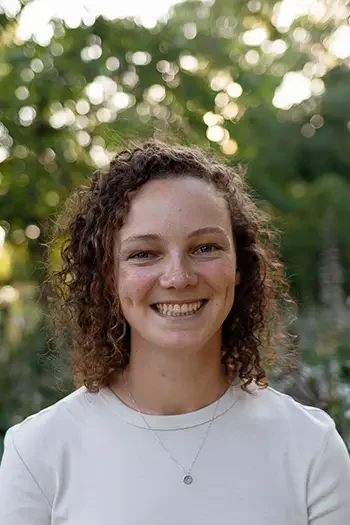
Molly Lowney
Assignment: Molly will be working as a Coastal Development and Sustainability Fellow with the Sustainability and Environmental Departments of the Blue Lake Rancheria Tribal Government (BLR). Her work will support various research needs to improve ocean management and increase technical capacity across BLR’s projects.
Education: Molly received a B.A. in Environmental Ethics and Policy from the University of Portland in 2021. She received her M.S. in Coastal and Marine Environments from the University of Galway in Ireland in 2025. Her graduate dissertation research was focused on social-ecological system change at Point Reyes National Seashore in Northern California.
Professional & Research Interests: Molly is interested in how social-ecological systems and traditional ecological knowledge can inform ethical and sustainable coastal management. She is particularly interested in bottom-up, community based approaches to coastal climate resilience. Molly has professional experience in environmental education, public outreach, and science communication. Her graduate dissertation research was focused on policy driven social-ecological system change at Point Reyes National Seashore in Northern California. As a WCOA Fellow, Molly hopes to learn about different systems of governance, ecological stewardship, and collaborating with coastal communities.
-
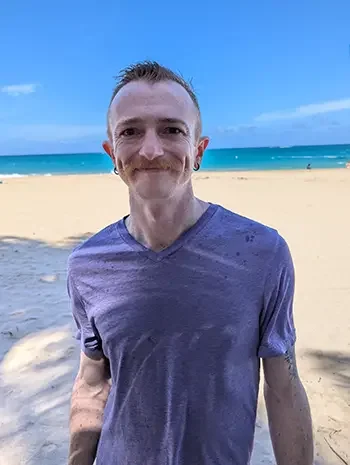
Luke Ghallahorne
Assignment: As an Estuary and Ocean Climatology Analyst Fellow, Luke will be working with the Columbia River Intertribal Fish Commission's (CRITFC) Coastal Margin Observation and Prediction (CMOP) program. He will be synthesizing physical and biogeochemical data with output from CMOP's Virtual Columbia River model to create climatological products and visualizations to inform tribal resource management and priorities, as well as integrating CMOP monitoring data into the NANOOS NVS Averages and Anomalies App, the West Coast Ocean Data Portal, and CMOP's Climatological Atlas. Luke is looking forward to learning from CRITFC's member tribes, supporting tribal priorities, and enhancing open access to environmental data.
Education: Luke completed his M.S. in Biology (Marine and Estuarine Science Program) at Western Washington University in 2025. His thesis research focused on modeling the transport of Olympia oyster larvae throughout the Salish Sea to support local and state restoration efforts. He received his B.S in Biology in 2023 with a marine emphasis and minor in mathematics from Western Washington University. He is a UWC Davis Scholar alum, graduating from UWC Atlantic College in 2013.
Professional & Research Interests: Luke is a marine ecologist whose love for invertebrates and underwater communities grew from dive training in Wales, Mozambique, Honduras, and New Zealand. His passions focus on ecosystem resilience to climate stress, particularly in the ways physical oceanography impacts population and community connectivity. He is especially interested in ocean and coastal modeling and how model products can inform real-world conservation and restoration. In the future, he hopes to combine cultural knowledge and science to enhance marine conservation and to bring modeling efforts to other fragile and at-risk ecosystems.